Knowledge is that
through which the knower knows. Islam placed a high value on knowledge.Muslims who are the followers of Islam aim to live a life of
complete submission to Allah with firm knowledge.
So, I would like to discuss in today’s my
khutba the following areas of knowledge Insha Allah.
1.Why knowledge important?
2.Impact of worship without
knowledge? In Duniya?In Akhira?
3.Sincerity and What are the
elements of sincerity? 4.Why all of these important in the context of today?
1.Why knowledge important?
The subject of knowledge very wide, but focus
on some key elements:
·Prophet Muhammad (saws) said:
"Seeking Knowledge is obligatory upon every Muslim." (Related by
Ibn 'Adiyy, Al-Bayhaqi & Al-Tabarani)
1.
·There is no comparison between the one
with knowledge and the one without… Allah (swt) says:
Say,
"Are those who know equal to those who do not know?" Only they will
remember [who are] people of understanding.
Muhammad (saw) said: "The
scholars are heirs of the Prophets. The Prophets do not leave behind an
inheritance of gold and silver; they leave behind the inheritance of knowledge.
Whoever acquired knowledge, acquired a lot of wealth." (Abu Dawud,
Bukhari)
a.How complete tasks, perform
actions without knowledge
b.How to know whether something has done something the right way
c.How worship Allah?
d.Therefore, knowledge not for
the sake of knowledge:
2.Impact /Consequences of worship without knowledge?
In Duniya?In Akhira?
By life:
a)No certainty about the correctness of our
beliefs and actions. The potential to commit a grave error
b)Allah (SWT) condemned past generations
who either ignored worship or worshipped through ignorance without knowledge
i.e. through than assumption:
(Surah Yunus:36)
3.Sincerity …. What are the
three elements of sincerity
a) For implementing the
knowledge
b) Worship and motivation
for Pleasure of Allah (SWT) – i.e. not for other people or for show
c) For passing on the
knowledge and not to hide or deny it.
Why knowledge not enough; what
else required? sincerity
a) Otherwise Shaiytan; otherwise like a number of
scholars…
4.Why all of this important in
context of today?
·Concerted or intensive a campaign against Islam – no middle ground – even try to hide by nick-name –
obvious
·War on Terror, growing Islam
phobia attacks by media, politician and people, Cartoon against our beloved
prophet by the name of freedom, anti-Hijab or banning Niqab and Hijab,
Citizenship test,
·People defining Islam –
Extremist and modernists…what is acceptable and what is not acceptable.
5.Why west afraid of this?
·Their fear is not the prayer
or the fasting – is that Muslims connect correctly to Iman and upon its
thoughts – fear the strength of ideas that emerging amongst the Muslims and its
connection to Iman and change.
·This is where the struggle is
today….battle of ideas – what defines you is the way of life which Muhammad
(saw) came with.
Which complete way of life.
This is
why success and failure of Muslims connected to this subject of
In a time where Muslims are facing challenges (persecution, division, and occupation, amongst many others), it is of vital importance now than ever before to remember that the bright days of Islam are coming soon. This is, in fact, a promise of the Messanger of Allah (peace and blessings upon him).
We Muslims can derive many important and relevant lessons from the Victory of Constantinople and put them into practice.
Like Sultan Muhammad Al-Fatih, we should work hard towards the Victory of Allah. Good intention, effort, and duaa are the only things The Creator is asking for from us, as the actual victory is indeed a 'gift' from Him (may He be glorified).
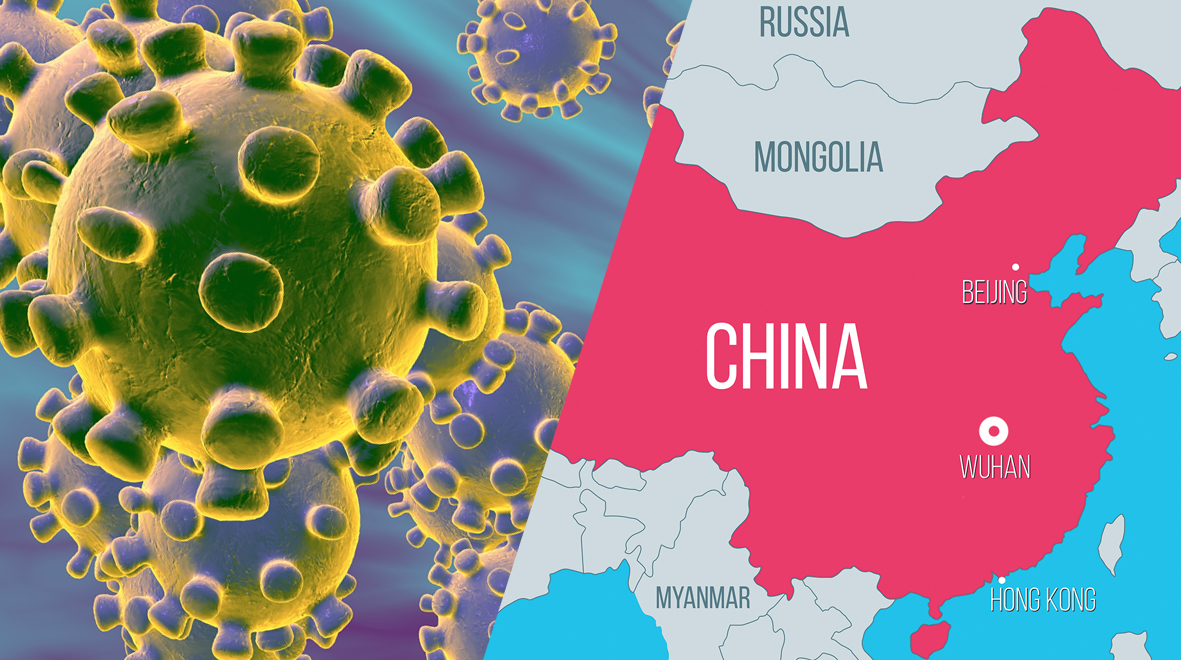
§THE new Coronavirus has spread across China. The city Wuhan: The London-sized city
where the virus began completely locked down with its 8.9 million people
for a couple of weeks. THE virus has spread At least 16
countries globally. Including Thailand, Sri Lanka, France, the US, Canada, and Australia.
More than 130 people have died in China and close to 6,000 have been infected.
There is no specific cure or vaccine as medics say.
§. The head of the
World Health Organization's Health Emergencies Programme has said. The
"whole world needs to be on alert" to fight the coronavirus,
§So, the threat is on the news everywhere.
Everyone is naturally curious about viruses, mutations, its origins and what is
happening.
§
As we
Muslims should explore the issue and connect it with Islam. It’s important
to show that Islam has a view on all issues and matters.
As Muslims
we must try toknow how Islam gives
guidance.
I divide my Khutba into 4 parts on the subject of
new coronavirus
‘And we have sent down to you the Book
as clarification for all things and as guidance and mercy and good tidings for
the Muslims.’ (an-Nahl 89)
We must
believe that Allah created us, He gave us the guidance in every single matter
of our life.
It may be
our family life, social life, economic life, educational life and political
life.
Whenever and
wherever we have problems we should approach them with an Islamic point of view.
The images
of cities on lockdown, scanning travelers at airports and stations and empty
streets can be scary. But this is not new for Muslims. When it comes to highly
contagious communicable diseases, Islam has given guidance.
Whilst they
probably didn’t have novel coronavirus in the time of the Prophet ﷺ,
they did have the plague.
«إذا سمعتم به في أرض فلا تقدموا عليها، وإذا وقع بأرض وأنتم
بها فلا تخرجوا فرارا منه»
The Prophet ﷺ
said, "If you hear about it (the plague) in a land that you are in, do not
enter that land, and if you hear that it broke out in a certain land, do not
run away from it." (Bukhari)
The first
part of this hadith is pretty obvious, but the second part is more difficult to
realize.
The natural response of a person confronted with a highly contagious disease is to run.
However, the
hadith is clear not to run. What would motivate a person not to run through?
The Prophet ﷺ
gave an incentive like no other. He said: ‘plague was a punishment which Allah
used to send on whom He wished, but Allah made it a blessing for the believers.
None (among the believers) remains patient in a land in which plague has broken
out and considers that nothing will befall him except what Allah has ordained
for him, but that Allah will grant him a reward similar to that of a martyr.’
(Bukhari)
The reward
of the shuhada (the martyrs) is amongst the greatest rewards of all in Islam
and it is given to the one who is patient and does not leave the area of
plague. This is tied with Islamic concepts of tawaqqul and knowing that life
and death lies solely in His ﷻ hands.
Islam,
therefore, it lays down the basis of controlling disease spread.
They have
the culture of consuming everything. In animals, they eat almost everything.
In Islam
there is an understanding of halal and tayyib (pure). This applies to what we
eat, how we farm, how we look after and transport livestock etc. There is
certainly Divine wisdom in this that we may or may not be aware of.
Many
practices these days are far from normal.
Back in the
90’s there was an outbreak of mad cow disease. It was later shown to be the
result of producers, under pressure to make cheaper meat, grinding up the
remains of dead livestock and feeding it back to their herds to save money on
grain.
Eating Halal
and eating pure is the best prevention.
Islam
institutes basic hygiene that prevents transmission is well known to all of us.
‘Whenever the Messenger of Allah ﷺ
sneezed, he would cover his mouth with his hand or a piece of cloth...’
(at-Tirmidhi).
Washing
hands, wudhu, ghusl, and personal hygiene are all strong aspects of Islam.
3. Is this Punishment, test or reminder?
With concept of enjoin the good and forbid the evil
The inevitable question that always arises is why?
Is this
Allah’s ﷻ punishment on a
people for their disobedience and oppression upon others? Especially
considering what the Chinese government is doing to Uyghur Muslims?
Is He ﷻ
testing the Chinese people so that they may return to His remembrance?
Is He ﷻ
reminding the Muslims of His power? Or responding to the dua of the oppressed?
Or highlighting how the Muslim rulers have truly failed the Uyghurs and how
utterly useless they are? Or that we all too need to take heed before trials
befall us?
It could be
any or all of these.
Abu Sa`eed Al-Khudri reported: The Messenger of Allah said, "Whoever
amongst you sees an evil, he must change it with his hand; if he is unable to
do so, then with his tongue; and if he is yet unable to do so, then with his
heart; and that is the weakest form of Faith". [Muslim]
Nu`aman Ibn Basheer, May Allah be
pleased with him, reported: The Prophet (SAW) said: "The likeness of the man who observes the limits prescribed by Allah and that of the
man who transgresses them is like a group of people who get on board a ship
after casting lots. Some of them are in its lower deck and some of them in its
upper (deck). Those who are in its lower (deck), when they require water, go to
the occupants of the upper deck, and say to them: `If we make a hole in the
bottom of the ship, we shall not harm you.' If they (the occupants of the upper
deck) leave them to carry out their design they all will be drowned. But if
they do not let them go ahead (with their plan), all of them will remain
safe". [Al-Bukhari]
We learn from this Hadeeth that the
consequences of committing acts that are forbidden in Islam are not
confined only to those persons who commit them, but the whole society has to
suffer the consequences. It is, therefore, essential that the people who are in
the habit of committing sinful acts and violate Divine injunctions, should be
checked to save the whole society from destruction. If this is not done, the
entire society will have to face the Divine punishment.
The Prophet said, "Beware
of sitting on roads (paths).'' The audience said: "We have them
as sitting places.'' The Messenger said, "If
you have to sit there, then observe the rights of the way". They
asked, "What are the rights of the way?'' He said, "To
lower your gaze (on seeing what is illegal to look at), removal of harmful
objects from the way, returning greetings, and enjoining good and forbidding
wrong". [Al-Bukhari and Muslim]
A Muslim
should always take heed. Be fearful of Allah’s ﷻ
punishment, be reminded of his shortcomings and push ahead to bear his
responsibilities according to his capabilities.
4. Finding a cure.
The Prophet ﷺ
said, ‘“There is no disease that Allah has sent down except that He also has
sent down its treatment.’ (Bukhari).
Unfortunately,
we do not think of Muslims at the forefront of medicine. But there was a time
that we were. This ummah invented hospitals and trained doctors.
The state
and rulers saw it their duty to look after their citizens.
Khalifah
Umar al Khattab (ra) said: ‘If a lost sheep under my care were to die on the
banks of the Euphrates, I would expect Allah the Exalted to question me about
it on the Day of Resurrection.” (Ḥilyat al-Awliyā’ 137)
If that was
his view of the animals, what do you think his concern for humans was?
Our
scientists were motivated by Allah’s ﷻ
reward,
‘If anyone saved a life, it would be
as if he saved the life of all mankind.’ (al Maeda 32)
Sadly, today
in the absence of Islam, it is all about the money. ‘Third world’ and poor
man’s diseases are not considered worth spending money on. At least that is, if
it doesn’t spread!
We’ve seen
this time and time again with previous outbreaks. For instance, Ebola has been
around for 40 years and vaccines could have been developed but weren’t because
it was seen as an African problem.
Private
pharmaceutical companies only invest in that which will make them profit. It is
no wonder that there is so much inequality in health where ‘the rich get the
best care,’ and ‘the poor are left to die.’
Conclusion
These are
just some ideas that can be raised among our children and adults to show
Islam’s relevance to today’s problem. To educate. To assure. To inspire.
1. Islam has given guidance for
everything
2. Prevention is better than cure.
3. Is this Punishment, test or
reminder? With the concept of enjoin the good and forbid the evil
Say:
"Nothing shall ever happen to us except what Allah has ordained for us. He
is our Maula (Lord, Helper, and Protector)." And in Allah let the believers
put their trust.’ (Tauba 51)
KHUTBAH HELD AT ALBAYAAN ARABIC FOUNDATION ON 31/01/2020
THANKS TO ALL THE BROTHERS WHO HELP ME TO WRITE THIS KHUTBAH